Author: St. Charles Borromeo
Sign up for our mailing list!
At this Sunday’s Mass, we invite you to join our mailing list, which is sent out weekly to update you about all of the activities of our Catholic community.
2nd Sunday of Lent – Look at the Stars

THE CRUCIFIXION
The first session of lecture, prayer and discussion on the Crucifixion met last Thursday. It was wonderful seeing members of St Charles and Grace Church praying and discussing a matter of our common faith so intently together. You may find the Podcast of the address and the music at our website here. I hope you will find the talk enlightening and the music uplifting, but the most valuable part of the evening was the discussion. This is the kind of topic which calls out for an examination from as many perspectives as possible. I hope that you will be able to attend next Thursday’s session at Grace Church and add your heart and voice to our Lenten journey.
(A question on Gnosticism arose at the meeting; you will find an excellent article on this at the end of this post.)
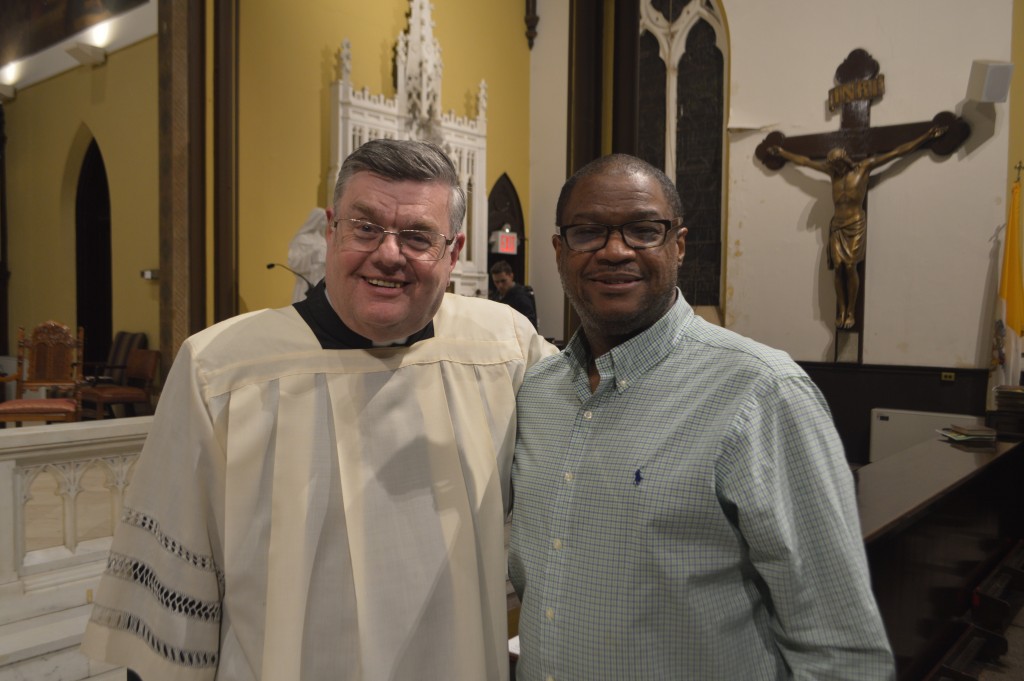
FORTIETH ANNIVERSARY OF ORDINATION TO THE PRIESTHOOD
I will be celebrating my 40th Anniversary of Priestly Ordination on Sunday, March 31st at the 11:15 AM Mass. I ask for your prayers and thank you for the tremendous affection and support you have shown me in my relatively brief time at St Charles. As this is Lent, there will be no reception or other commemoration. I expect to be alive for my 50th Anniversary and will have something then.
– Fr Bill
FIRST READING
Second Sunday of Lent
Genesis 15:5–12, 17–18
Today we read a section from the 15th chapter of Genesis. It is the origin story of the Jewish people. Dating the portrayed events – much less separating fact from legend – is essentially impossible. Memories would have been passed down for a millennium before they were written down about 500 BC. Along the way they would have been influenced by historical events, theological assumptions, and real estate conflicts. What we shall see, however, is that the Jews could not understand themselves without prophecy and covenant.
Continue reading “2nd Sunday of Lent – Look at the Stars” →
Podcast: The Crucifixion – Lecture Series Part 1
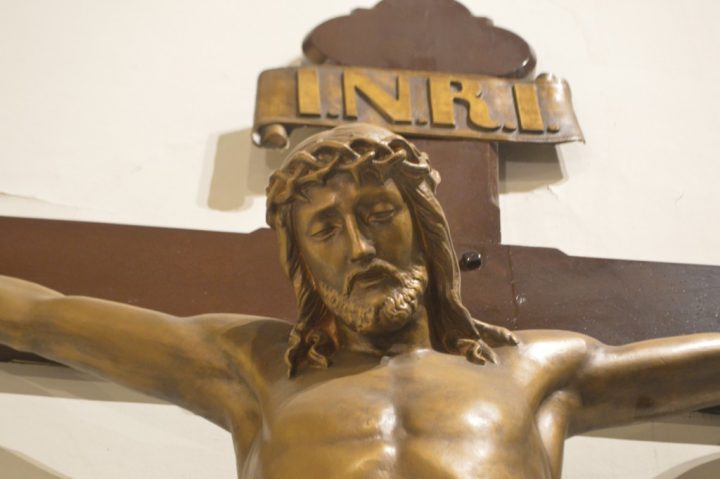
This Lent, St. Charles is partnering with Grace Church for a four-part Lecture Series on The Crucifixion by Fleming Rutledge. This inter-faith fellowship session was on
• Thursday, March 14th at 7:00 PM at St. Charles Borromeo.
Lecturer: Fr. Bill Smith
Musician: Joseph Vanderpool
Future sessions will be held on:
• Thursday, March 21st at 7:00 PM at Grace Church (254 Hicks Street).
• Thursday, March 28th at 7:00 PM at St. Charles Borromeo (19 Sidney Place).
• Thursday, April 4th at 7:00 PM at Grace Church.
Podcast – 1st Sunday Lent – 11:15 AM Mass (Fr. Smith)
[podcast]https://www.stcharlesbklyn.org/wp-content/uploads/2019/03/2019031011.mp3[/podcast]
1st Sunday of Lent – Enter to Give Thanks
Upcoming events this week
- Living Lent Prayer Groups: 2 groups meeting at 8 am and 6 pm at the Rectory starting this Sunday
- Book Club: in the Sacristy after the 11:15 AM Mass this Sunday. Motherless Brooklyn by Jonathan Latham
- Eucharistic Adoration: Weekdays from 9 am – noon. Spend an hour with Jesus.
- Media & Communications Committee Meeting: Monday at 7 PM at the Rectory
Think Out of the Box:
See what you can do to Celebrate, Reflect, Worship, Connect and Act! Download our flyer with all of our opportunities this Lent:
Lent Flyer 2019 – St. Charles Borromeo
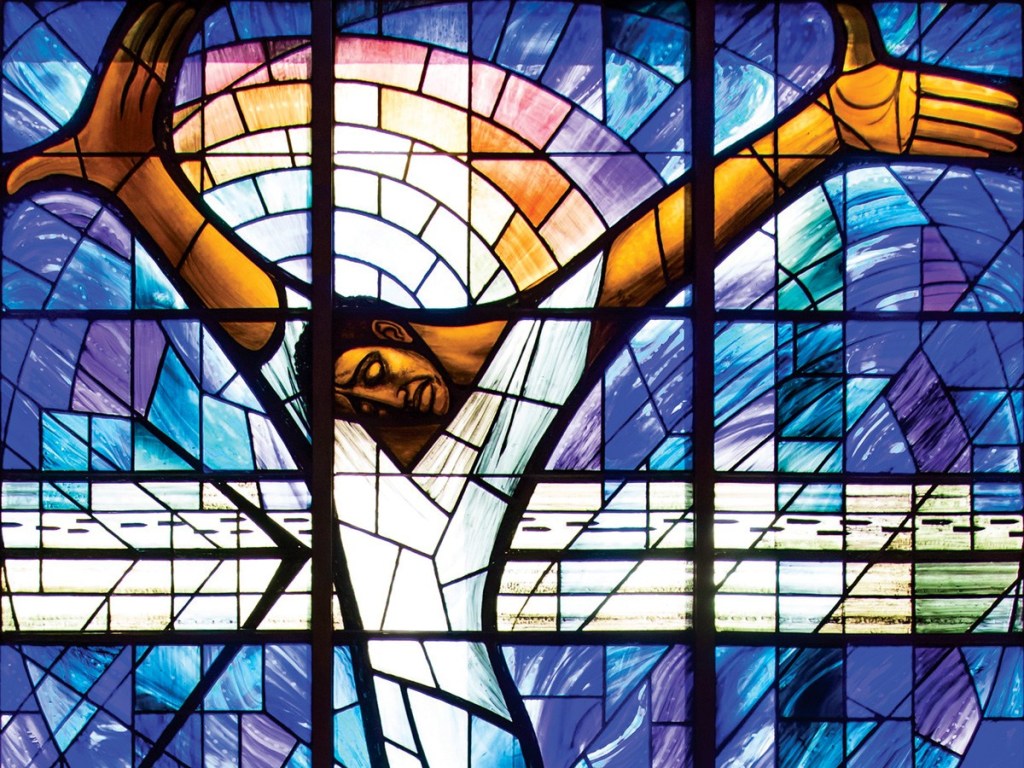
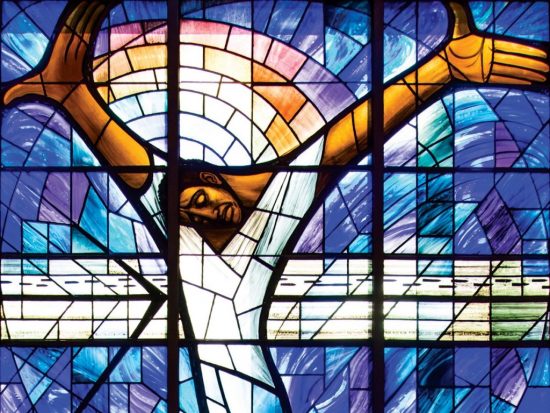 The Crucifixion: prayer and discussion series
Thursdays at 7 PM from 3/14 – 4/4
Every week at Mass we make our Profession of Faith and say: “For our sake he was crucified under Pontius Pilate, suffered death and was buried.”.
Would your relationship with Jesus be any different if we proclaimed instead that he died by hanging or decapitation?
Together with our neighbors at Grace Church we will examine why the Crucifixion is so important in knowing and loving Jesus and in our own attempts to follow him. We will use Fleming Rutledge’s stunning book “The Crucifixion” as our text, but compliment this with prayer and discussion. We are most happy to have Fr. Allen Robinson, the Rector of Grace Church, joining us here at St. Charles and inviting us to continue our exploration at Grace Church next week. The first lecture/discussion will be at St. Charles this Thursday. A light collation will be served at 7:00 PM.
150th Anniversary of the Church Building
As many of you may be aware, St. Charles Borromeo Parish was founded in 1849 and the original church building was on the site of what is now Mary McDowell Friends High School. The original church edifice was badly damaged by fire in 1868 and the parish moved into our current home on May 23, 1869.
So this Memorial Day weekend will be the 150th Anniversary of our beloved St. Charles church building. To celebrate and commemorate this important hallmark in our parish and community history, we will be holding an anniversary celebration on the following weekend, June 2. There will be food and beverages, live performances, icebreakers, games, and so much more! Our goal is to host an event that will be enjoyable for every member of our parish family. In order to make this possible, we are looking to recruit some volunteers (meaning it is a short term commitment) to help us plan and execute our celebration. If you are interested in participating and helping plan the celebration, please speak to me after mass or email [email protected].
First Reading
First Sunday of Lent
Deuteronomy 26:4–10
The book of Deuteronomy is the last book of the Pentateuch or Torah – the first five books of the Bible. It is written as discourses by Moses to the Israelites as they are about to enter the promised land. This would have been about 1250 BC. But as we have seen when we have discussed the Pentateuch, its final edition was around 500 BC after a substantial number of the Jewish leadership returned to Jerusalem from exile in Babylon. We will need to keep both these experiences in mind as we read today’s passage.
1 “When you have come into the land which the LORD, your God, is giving you as a heritage, and have occupied it and settled in it, 2 you shall take some first fruits of the various products of the soil which you harvest from the land which the LORD, your God, gives you, and putting them in a basket, you shall go to the place which the LORD, your God, chooses for the dwelling place of his name. (D 26:1-2)
It is assumed here that Joshua has successfully invaded the land and that the Israelites have become farmers. This would mean that they are settlers and are able to have a permanent sanctuary – place of worship and a permanent priesthood. As herders they would not have had a place of worship but would have offered sacrifice whenever and wherever they could. They would also not have had a permanent and hereditary priesthood, but the sacrifices would have been offered by the chief or clan leader. This is a fundamentally different world.
3 There you shall go to the priest in office at that time and say to him, ‘Today I acknowledge to the LORD, my God, that I have indeed come into the land which he swore to our fathers he would give 4 The priest shall then receive the basket from you and shall set it in front of the altar of the LORD, your God. Deuteronomy 26:4 (NAB)
Having been given the land the Jew is to live in a state of permanent thanksgiving and their rituals as we read today were designed to celebrate this.
The first part is telling the story.
5 Then you shall declare before the LORD, your God, ‘My father was a wandering Aramean who went down to Egypt with a small household and lived there as an alien. But there he became a nation great, strong and numerous. .’ Deuteronomy 26:5 (NAB)
They entered Egypt as a clan, not really a nation. In Egypt they prospered and because of their common worship became a people. They were then oppressed, but saved by the power of God. Now they offer thanks to God for their deliverance, prosperity, and community.
10 Therefore, I have now brought you the first fruits of the products of the soil which you, O LORD, have given me.’ And having set them before the LORD, your God, you shall bow down in his presence. Deuteronomy 26:10
Our selection for Mass ends here but the celebration of thanksgiving continues with a meal:
11 Then you and your family, together with the Levite and the aliens who live among you, shall make merry over all these good things which the LORD, your God, has given you. Deuteronomy 26:11
As with the more formal temple worship that will develop after Solomon, the offering – sacrifice – ends with a meal. The situation assumes a very prosperous farmer. Note that he has a family and a Levite – house priest. Note especially that as the Jews were once aliens, they are commanded to bring those aliens among them to their thanksgiving table.
Thanksgiving must be shared and the passage which follows this speaks of a special tithe every three years:
12 “When you have finished setting aside all the tithes of your produce in the third year, the year of the tithes, and you have given them to the Levite, the alien, the orphan and the widow, that they may eat their fill in your own community, 13 you shall declare before the LORD, your God, ‘I have purged my house of the sacred portion and I have given it to the Levite, the alien, the orphan and the widow, just as you have commanded me. In this I have not broken or forgotten any of your commandments.
Notice that the care of those who have been ignored or dispossessed is not “charity” or a matter of discretion, but a commandment and thus a matter of Justice. It is part of the covenant that has and is as important and essential as sacrifice itself.
Therefore, it should come as no surprise that the next section recommits the people to that covenant:
This day the LORD, your God, commands you to observe these statutes and decrees. Be careful, then, to observe them with all your heart and with all your soul.
17 Today you are making this agreement with the LORD: he is to be your God and you are to walk in his ways and observe his statutes, commandments and decrees, and to hearken to his voice.
18 And today the LORD is making this agreement with you: you are to be a people peculiarly his own, as he promised you; and provided you keep all his commandments,
19 he will then raise you high in praise and renown and glory above all other nations he has made, and you will be a people sacred to the LORD, your God, as he promised.” Deuteronomy 26:16–19
This would have been especially important to the Jews struggling to restore the temple but also their way of life in Jerusalem. They needed to be reminded that they must maintain proper worship and that meant one centered on gratitude to God and inclusion of all. It also meant that worship could be conducted with great solemnity and precision, but if it was not matched by care of the poor and obedience to the commandments, it would be not only ineffective but blasphemous. They would not be peculiarly the people of God.
So indeed, it is with us. The world Eucharist means “to give thanks”, and we do so for greater reason than the Jews and to celebrate a deeper freedom. Our Exodus is not to a promised land but to a new existence.