Please download the bulletin for November 04, 2018.
31st Sunday Ordinary Time – Fulfilling the Covenant

St. Charles Borromeo Feast Day
Sunday, November 4th is the feast day of our patron saint, St. Charles Borromeo. We will celebrate it as a Solemnity at all the Masses.
Bro. Beckett Ryan Memorial Mass
There will be a memorial Mass for Brother Beckett Ryan at St. Charles on Saturday, Nov. 10 at 10:00 AM. A reception will follow in the Rectory.
All Souls Novena
There will be a Novena of Masses for all the faithful departed. They will be celebrated on:
1) Friday – Nov. 2 – 12:10 PM
2) Saturday – Nov. 3 – 12:00 Noon
3) Sunday – Nov. 4 – 7:00 PM
4), 5), 6) – Monday, Tuesday, Wednesday – Nov. 5, 6,7 – 12:10 PM
7) & 8) Friday – Nov. 9th – 12:10 PM and 7:00 PM
9) Saturday – Nov. 10 – 12:00 PM
Envelopes may be found in the pews and entrances to the Church or by contacting the rectory.
Meet & Greet Next Sunday
Our next monthly Meet & Greet will be next Sunday, Nov. 11 after each of the Masses. We will have a presentation about Lectors and extraordinary Eucharistic Ministers, for those who may be interested and called to serve. Please join us in fellowship with food and drink.
Holiday Fair and Wreath Sale
We are seeking parishioners to help with the Holiday Fair and Wreath Sale on December 1 from 9 am – 3 pm at the Church. We are also offering tables for vendors who would like to sell for $25. Please contact the Rectory if you are interested.
Reading Matters:
Two quotes from the encyclical “Pacem in Terris” (Peace in the World) from St. John XIII given in 1963:
We must speak of [hu]man’s rights. Man has the right to live. He has the right to bodily integrity and to the means necessary for the proper development of life, particularly food, clothing, shelter, medical care, rest, and, finally, the necessary social services.
In human society one man’s natural right gives rise to a corresponding duty in other men; the duty, that is, of recognizing and respecting that right… Hence, to claim one’s rights and ignore one’s duties, or only half fulfill them, is like building a house with one hand and tearing it down with the other.
Thirty-first Sunday in Ordinary Time
Nov. 4
Deuteronomy 6: 2-6
The Book of Deuteronomy took 1,000 years to be written in its present form and picked up a lot of wisdom along the way. As we saw several months ago when we first read a passage from it, the original exhortation would have been spoken in the late 1,200s BC. It was rediscovered during the reign of King Josiah of Judea, the southern kingdom of the Jews, about 625BC. This provoked a religious revival marked by destroying other temples and centralizing worship in Jerusalem. Within a generation however the newly renovated Temple and indeed the entirety of Jerusalem was destroyed, and the leaders of the people sent into exile in Babylon. The final edition of the book was written when the exiles were permitted to return to Jerusalem and rebuild the temple beginning in 537. It is this version that has the most to teach us today.
The section of Deuteronomy that will be read at this week’s Mass immediately follows the giving of the “Ten Commandments”. As laws, they are rather unexceptional and reflect the common wisdom of their time and place. It is who gave the laws and why he wished them obeyed that is most important.
Immediately before giving the Commandments, God says to the people:
‘I, the LORD, am your God, who brought you out of the land of Egypt, that place of slavery. Deuteronomy 5:6
He speaks not as the chief God of a multitude, like the Greeks, nor a God of Nature but as a person who has entered into the lives and history of his people. He thus establishes his right to give them laws by his previous actions and ongoing commitment.
The Lord spoke to the people directly:
22 “These words, and nothing more, the LORD spoke with a loud voice to your entire assembly on the mountain from the midst of the fire and the dense cloud. Deuteronomy 5:22
The response of the people was fear:
(The leaders of the people said to Moses), ‘The LORD, our God, has indeed let us see his glory and his majesty! We have heard his voice from the midst of the fire and have found out today that a man can still live after God has spoken with him. 25 But why should we die now? Surely this great fire will consume us. If we hear the voice of the LORD, our God, any more, we shall die. Deuteronomy 5:24–25
They understood that this was God showing and sharing himself and that they could easily be overwhelmed by it. Destruction would have been expected but Moses tells them:
28 “The LORD heard your words as you were speaking to me and said to me, ‘I have heard the words these people have spoken to you, which are all well said. 29 Would that they might always be of such a mind, to fear me and to keep all my commandments! Then they and their descendants would prosper forever. Deuteronomy 5:28–29
The fear of the Lord is the beginning of wisdom. The God who lead them from the land of Egypt is continuing to participate in their lives and demanding from them just behavior. If they and their descendants do this, they will prosper; if not, the God who could have destroyed them at that moment will discipline them severely.
Our selection this week follows this admonition. The connection between prosperity and obedience is again stated:
2 so that you and your son and your grandson may fear the LORD, your God, and keep, throughout the days of your lives, all his statutes and commandments which I enjoin on you, and thus have long life.3 Hear then, Israel, and be careful to observe them, that you may grow and prosper the more, in keeping with the promise of the LORD, the God of your fathers, to give you a land flowing with milk and honey.
The next passage, however, has a different emphasis and is one of the pillars of Judaism:
4 “Hear, O Israel! The LORD is our God, the LORD alone! 5 Therefore, you shall love the LORD, your God, with all your heart, and with all your soul, and with all your strength. 6 Take to heart these words which I enjoin on you today.
The God who has led them to freedom and offers prosperity is to be obeyed exclusively. This is not a statement of Monotheism for the original hearers and perhaps not for those implementing the Josiahan reforms, but it states that the Lord alone is to be acknowledged and worshiped. Love here is virtually synonymous with obedience. For the Jews, the first commandment is the pivotal one.
This is to remain with the Jews always. The author continues:
8 Bind them at your wrist as a sign and let them be as a pendant on your forehead.
9 Write them on the doorposts of your houses and on your gates.
This as we know is the origin of the mezuzahs on the homes of pious Jews and the phylacteries worn by Jewish men at prayer.
It is obvious why this would have been so important to the people who returned from Babylon to Jerusalem. They had experienced exile and were now reinstated in their homeland. They recognized that they did not obey the Commandments of the law, and so had not prospered. They had a second chance and were committing themselves to take it. Their experience was so powerful that by this time they could acknowledge a strict monotheism. It is interesting that they now become more precise about other spirits. Pagan gods are demoted to evil spirits which rebelled against the one true God.
This is the great gift of the Jewish people to the world. The all-powerful God wishes to know and lead us. This will be by our loving behavior towards each other, as well as by liturgical worship. This insight has served the Jewish people well. Is there any institution which has survived as long as Judaism? We have been told that for this to occur, that it was through obedience to the commands of God.
This was powerfully brought by the lives of those murdered at the “Tree of Life” synagogue in Pittsburgh. The profiles of the people who were killed were truly inspiring. They led lives of private decency and public service. If that was a cross section of that community, its very existence was a reproach to everything their attacker believed, and living proof of God’s promise to stay with his people if even a remnant were good and just.
However horrible this event and the countless other acts of anti-Semites throughout the years God has been true to his promise and the Jewish people faithful to the covenant. There is much to learn from those who Pope Pius XI called “our elder brothers in the faith”.
Br. Beckett Memorial Mass Sat. 11/10
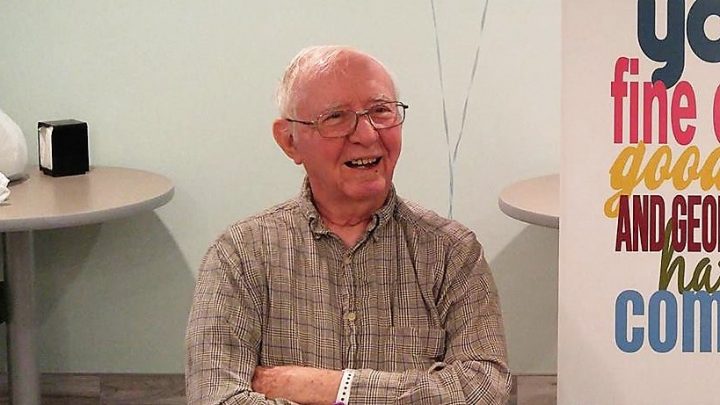
There will be a memorial Mass for Brother Beckett Ryan at St. Charles on Saturday, Nov. 10 at 10:00 AM. A reception will follow in the Rectory.
All Saints Day/All Souls Novena/St. Charles Feast Day
Wed., Nov. 1: All Saints Day: Holy Day of Obligation
Masses at 12:10 PM and 7 PM
Thu. Nov. 2 – Sat. Nov. 10: All Souls Novena
There will be a Novena of Masses for all the faithful departed. They will be celebrated on:
- 1) Friday – Nov. 2 – 12:10 PM
- 2) Saturday – Nov. 3 – 12:00 Noon
- 3) Sunday – Nov. 4 – 7:00 PM
- 4), 5), 6) – Monday, Tuesday, Wednesday – Nov. 5, 6,7 – 12:10 PM
- 7) & 8) Friday – Nov. 9th – 12:10 PM and 7:00 PM
- 9) Saturday – Nov. 10 – 12:00 PM(Envelopes may be found in the pews and entrances to the Church or by contacting the rectory.)
Sun. Nov. 4: PARISH PATRON SAINT FEAST DAY
The Feast of St. Charles Borromeo is next Sunday, Nov. 4. We will celebrate it as a Solemnity at all the Masses.

Meet & Greet this Sunday

Join us for fellowship this Sunday after each of the Masses. Coffee and pastries will be served.
29th Sunday Ordinary Time – Isaiah and the Undiscovered Country

Meet & Greet after Masses on 10/21
Enjoy fellowship with each other after each Mass this Sunday – coffee and pastries will be served. See flyer attached.
Update on Church Exterior Renovation
Work presence has picked up now. Mock-ups and samples are being presented to both the architect and Landmarks for approval, so materials can be ordered. Brick repair work is in progress. You will see the work gradually increase over the next several weeks until all materials are approved. That will continue in the exterior until Winter fully sets in and masonry work cannot continue. At that point other select work will take place until the weather warms enough for the masonry repairs to be completed. More detail will be provided as materials and samples are approved and work is in full swing.
Reading Matters:
A church that doesn’t provoke any crises, a gospel that doesn’t unsettle, a word of God that doesn’t get under anyone’s skin, a word of God that doesn’t touch the real sin of the society in which it is being proclaimed — what gospel is that?
Preaching series of Catholic Social Teaching resource.
In 2004 at the request of Pope St John Paul 2nd, the Vatican press published the “Compendium of the Social Doctrine of the Church”. The link below will connect you to the full text in English and in a very searchable format. This will allow you to explore any of the issues we have been discussing in some depth.
Note on Infant Baptisms:
There will not be Baptisms at Mass during Advent. Should this be the only time your family can attend we will make other provisions for you. Please note that the Solemnity of the Epiphany, Jan 6, falls on Sunday next Year and only Easter is a more appropriate day to be baptized.
First Reading
The Twenty-ninth Sunday in Ordinary Time
Isaiah 53: 10-11
This week’s reading is from Isaiah 53 and is part of one of the “suffering servant songs”. We encountered them before when discussing Isaiah and found that they were written in Jerusalem after the return of the exiles around 520 BC. It was time of spiritual vertigo. Their temple – indeed most of Jerusalem – was destroyed by the Babylonians. An objective spectator would have thought Judaism dead and urged the Jewish leaders now in Babylon to make the best of it. Yet God though Cyrus, Prince of Persia, gave them an opportunity to start again. Enough returned to Jerusalem to begin rebuilding.
This was a great demonstration of God’s power, but the returning exiles were obviously disappointed. They expected not only the opportunity to once again offer sacrifice, but to be rewarded in more tangible ways. Yet there was no wealth to be found and they lived as homesteaders. How are they better off? What is God doing? In this reading, Isaiah gives a profound answer and one especially important for the present situation of our time and place.
This song begins with
1 Who would believe what we have heard?
To whom has the arm of the LORD been revealed?
2 He grew up like a sapling before him,
like a shoot from the parched earth;
There was in him no stately bearing to make us look at him,
nor appearance that would attract us to him. Isaiah 53:1–2
It is important to note that the “we” here are the princes of foreign nations. This is the frame that Isaiah has decided to use, and it accomplishes two aims. It gives this an immediate international framework, prepares the reader for the conclusion, and teaches by irony. Insights which the Jews should have had first, come through foreigners and pagans.
Note as well that in the context of the Book of Isaiah the suffering servant is the people of Israel. Christians see Jesus in the suffering servant, and the New Testament makes this connection over 40 times but we will stick to the immediate context.
At first the kings look at Israel in the same way the Jews themselves did. As a defeated people Israel was “avoided by men” and “held in no esteem” 53:3.
Striking then is the change in attitude:
4 Yet it was our infirmities that he bore,
our sufferings that he endured,
While we thought of him as stricken,
as one smitten by God and afflicted.
5 But he was pierced for our offenses,
crushed for our sins,
Upon him was the chastisement that makes us whole,
by his stripes we were healed. Isaiah 53:4–5
That one person or nation could suffer for another is a new idea, but it has roots in Judaism itself with the scapegoat. The high priest places the sins of the people on the head of a goat and then
:2 The goat shall bear on itself all their iniquities to a barren region; and the goat shall be set free in the wilderness. (Lev, 16;2)
The kings are asking the Jewish people to look at their recent history:
8 Oppressed and condemned, he was taken away,
and who would have thought any more of his destiny?
When he was cut off from the land of the living,
and smitten for the sin of his people, Isaiah 53:8
They truly died as a nation; yet, even while they were in exile, prophets reminded them of their unbreakable connection with God. Recall the vision of Ezekiel:
4 Then he said to me: Prophesy over these bones, and say to them: Dry bones, hear the word of the LORD! 5 Thus says the Lord GOD to these bones: See! I will bring spirit into you, that you may come to life. 6 I will put sinews upon you, make flesh grow over you, cover you with skin, and put spirit in you so that you may come to life and know that I am the LORD. 11 Then he said to me: Son of man, these bones are the whole house of Israel. They have been saying, “Our bones are dried up, our hope is lost, and we are cut off.” 12 Therefore, prophesy and say to them: Thus says the Lord GOD: O my people, I will open your graves and have you rise from them, and bring you back to the land of Israel. Ezekiel 37:4-6, 11-12)
Isaiah is using the device of foreign kings to tell the people not only that they have been resurrected, but why. The speaker changes in verse 10, and Isaiah is speaking for God himself.
If he gives his life as an offering for sin,
he shall see his descendants in a long life,
and the will of the LORD shall be accomplished through him. Isaiah 53:10
The purpose of Israel is not power, but presence: to be of God in the world and to accomplish God’s will. Isaiah famously says
It is too little, he says, for you to be my servant,
to raise up the tribes of Jacob,
and restore the survivors of Israel;
I will make you a light to the nations,
that my salvation may reach to the ends of the earth. (Isaiah 49:6)
Israel’s task is international: to bring all to the knowledge of God by living lives of righteousness. This any adult knows requires purification; although Israel was no guiltier than others because of the knowledge she has received and the task for which she is being prepared, she required punishment that was literally death and rebirth. Isaiah makes this clear at the very beginning of this section of the book:
Comfort, comfort my people
says your God.
2 Speak tenderly to Jerusalem
and declare to her
that her term of service is over,
that her iniquity has been pardoned,
that she has received from the LORD’s hand
double for all her sins. (40:1-2)
Given the events of this last summer the message of Isiah to the Church is loud, clear and painful.
The cover ups particularly concerning the rise of former Cardinal Mc Carrick reveal that we need revolution, not reform. This is not in doctrine or moral teaching. The change needs to be in pastoral practice and accountability in many areas. As this means a change in power, we can expect it to be bitterly fought.
We need to recognize what the Church is. We are not a club or self-help group. We do not exist for ourselves but for the world. Our job is not to save our souls but to be a light of the nations by bringing the good news to the poor. If we do that, we will know God here and now and live with him forever.
This is difficult and painful, and we will be taught how to do it by saints. In his homily last week for the newly canonized saints including Oscar Romero and Pope Paul the sixth, Pope Francis reflects this reality perfectly. The emphasis is mine, but the words are his:
“Let us ask for the grace always to leave things behind for love of the Lord: to leave behind wealth, the yearning for status and power, structures that are no longer adequate for proclaiming the Gospel, those weights that slow down our mission, the strings that tie us to the world. Without a leap forward in love, our life and our Church become sick from ‘complacency and self-indulgence.
“All these saints, in different contexts, put today’s word into practice in their lives, without being lukewarm, without calculation, with the passion to risk everything and to leave it all behind …. May the Lord help us to imitate their example.”
AMEN