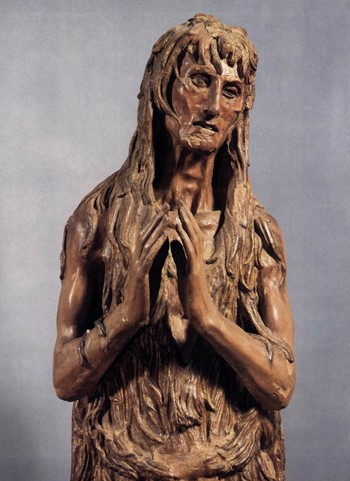
Feast of St Mary Madelaine
“The Apostles to the Apostles”
Monday, July 22
There is a tendency among Catholics to call any celebration of a Saint a feast. This is not quite correct. There are 4 levels of commemoration. The first is an “optional” memorial. This means that the Saint is acknowledged as worthy of recognition by the entire church but leaves it up to the individual community to publicly celebrate it at Mass or not. Most American Parishes commemorate American Saints like John Neumann or Elizabeth Ann Seton even though it is not required. The next level is “Obligatory” memorial. These are Saints that are considered so important for the entire church that they must be remembered. This Friday we will celebrate the Obligatory memorial of Saints Joachim and Anne, the Parents of Mary. The next level is “Feast” strictly speaking. These are Saints whose lives were so important that we are called to pay special attention. Feasts have special prayers and readings and we sing or say the Gloria. This week we celebrate the Feast of the Apostle James on Friday. The highest level is a Solemnity. These are usually reserved for Jesus and Mary but Sts. Peter and Paul and John the Baptist are so honored. These celebrations are given the same honor and form as a Sunday Mass.
Pope Francis has elevated the celebration for St. Mary Magdalene to a Feast. Indeed, she is to be treated as an Apostle. One of the signs of a feast of an Apostle is the use of a special Preface (prayer before the consecration). As this prayer refers only to men, Pope Francis commissioned a special preface for this feast. The English translation is not yet ready, but please find below an unofficial version. It is well worth reading – note the official name.
Preface of the Apostle of the Apostles
It is truly right and just,
our duty and our salvation, always and everywhere to give you thanks.
Lord, holy Father, almighty and eternal God,
whose mercy is no less than His power,
to preach the Gospel to everyone, through Christ, our Lord.
In the garden He appeared to Mary Magdalene,
who loved him in life, who witnessed his death on the cross
who sought him as he lay in the tomb
who was the first to adore him when he rose from the dead,
and whose apostolic duty was honored by the apostles
that the good news of life might reach the ends of the earth.
And so Lord, with all the Angels and Saints,
we, too, give you thanks, as in exultation we acclaim:
Holy, holy, holy Lord, God of power and might …
To know why I chose the picture above, you will have to attend the 12:10 Mass on Monday.
Adult Sacraments:
Baptism, Communion and Confirmation: Non-Catholics who wish to become Catholic or Catholics who wish to receive Communion, Eucharist or Confirmation are asked to call or email Fr. Smith. The classes will begin in the Fall.
Marriage: St. Charles Parish congratulates those who will become engaged this summer and we wish to accompany you on your way to the altar and beyond. Please contact Fr. Smith at your earliest convenience. This includes those who will be married in another Parish and especially those who will be married in another country.
A special invitation is extended to any adult in the Parish to participate, even if you . This is a wonderful opportunity to not only update your knowledge of the Church’s teaching but also to experience true spiritual formation.
Please contact Fr. Smith at the Rectory (718-625-1177 ext 409)
First Reading
Sixteenth Sunday in Ordinary Time
Gen 18:1-10A
July 21, 2019
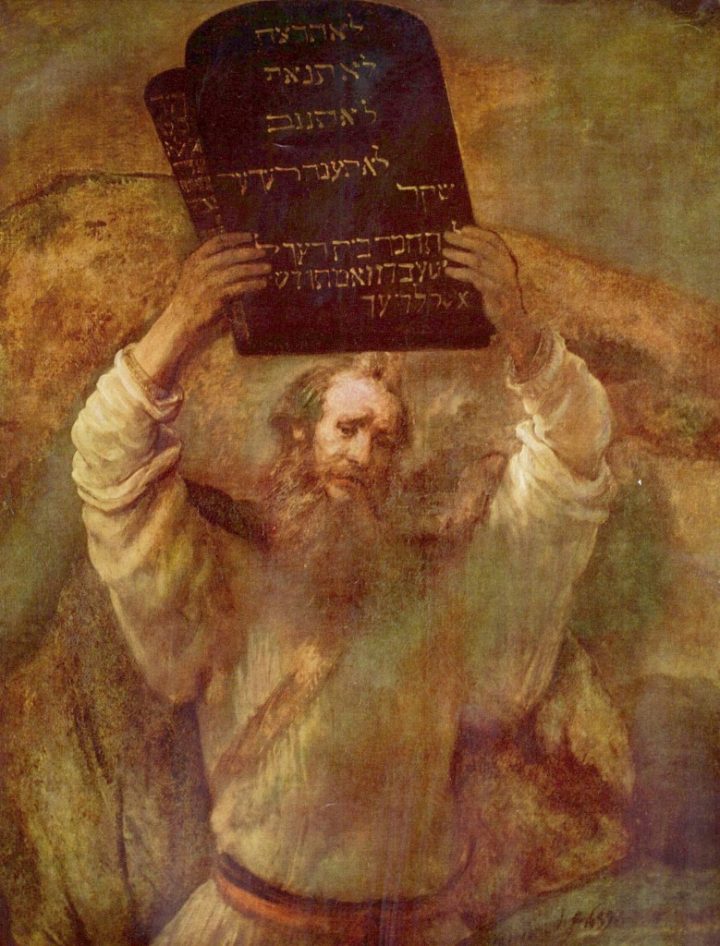
Today’s passage from Genesis is perfect reading for a heat wave. It occurs during the middle of the day when it is so hot that even a seasoned desert dweller like Abraham can do nothing but sit at the entrance – covered part – of his tent and wait for the relative cool of the evening to finally come. He is more than surprised to see 3 men appear near him at this bestial time of day. This is the desert and people could be seen far off in the distance, yet they seem to simply appear before him in an instance. We have been told in the sentence before that this was to be a theophany, an appearance of God, and Abraham senses that this is not an ordinary meeting, although he does not know what, with whom, or how.
As a host in his time and place, he would be expected to care for his guests. Yet his actions are extreme.
When he saw them, he ran from the entrance of the tent to greet them; and bowing to the ground, (Gen 18:2).
This demonstrates his recognition of their superiority.
He offers them “a little food”: but then
Abraham hastened into the tent and told Sarah, “Quick, three seahs of fine flour! Knead it and make rolls.”
7 He ran to the herd, picked out a tender, choice steer, and gave it to a servant, who quickly prepared it. Gen 18:6–7).
This is clearly a feast. He recognizes them as so superior to him that he waits on them as their servant and does not take his place at table.
Then he got some curds and milk, as well as the steer that had been prepared, and set these before them; and he waited on them under the tree while they ate. (Ge 18:8).
We need to note the obvious confusion here. We, the readers, have been told that the Lord is appearing to Abraham, but three people stand before him. There is no consensus as to what this means or how it developed. For some commentators, it reflects the very earliest days of the Hebrews when they still believed in a multitude of gods, the Lord was their God and superior to all. To others, it is a sign that The Lord has brought members of his court with him. It is perhaps best to remember that this was finally edited millennia after the event and the final authors would have seen it as a sign of the uncanny. We should be a bit dazed and confused when the Lord is present.
As confusing would have been the next incident. They ask Abraham, “Where is your wife Sarah?” First, respectable wives were not seen at these times, but like Sarah, was off in a corner. This was a great breach of protocol. Second, how did they know her name? They were strangers.
Perhaps somewhat dumbfounded, he responds that she is in the tent. Then:
One of them said, “I will surely return to you about this time next year, and Sarah will then have a son
With this, Abraham now knows that it is the Lord who is speaking to him. In the previous chapter, the Lord had appealed to Abraham and said:
1 But my covenant I will maintain with Isaac, whom Sarah shall bear to you by this time next year.” (Gen 17:21)
This occurred only several weeks before, when the Lord made a covenant with Abram.
When Abram was ninety-nine years old, the LORD appeared to him and said: “I am God the Almighty. Walk in my presence and be blameless.
2 Between you and me I will establish my covenant, and I will multiply you exceedingly. Gen 171-2
Abram would walk in the Lord’s presence and he would be rewarded by being the Father of a great nation. He thus changes his name from Abram – “the Father is exalted” – to Abraham – “Father of a great nation”.
The physical sign of this covenant was circumcision. These, as we have seen, are a very physical people, and a physical sign was required.
Today’s scene is a reminder that given the ages of Abraham and Sarah this promise was difficult to accept. As we see in the next section not included in our reading today:
Sarah was listening at the entrance of the tent, just behind him.
11 Now Abraham and Sarah were old, advanced in years, and Sarah had stopped having her womanly periods.
12 So Sarah laughed to herself and said, “Now that I am so withered and my husband is so old, am I still to have sexual pleasure? (Gen 18:10b-12)
As I said, these are very physical people.
The Lord hears this and said to Abraham,
Why did Sarah laugh and say, ‘Shall I really bear a child, old as I am?’14 Is anything too marvelous for the LORD to do? At the appointed time, about this time next year, I will return to you, and Sarah will have a son (Gen 18:13)
This is not the end of this section, however. The Lord and his messengers are on their way to Sodom.
Then the LORD said: “The outcry against Sodom and Gomorrah is so great, and their sin so grave,
21 that I must go down and see whether or not their actions fully correspond to the cry against them that comes to me. I mean to find out.” (Gen 18:21-22)
Abraham understood that the Lord means to destroy it, and takes this opportunity to bargain with the Lord to save them. He eventually received His promise that He would save the city if there were 10 righteous people. We need to remember why this was important to Abraham and why the eventual destruction is important to this narrative.
When we read about Abram several weeks ago in Gen 14:18-20, he was revealed as a fearsome warrior who fought a cabal of chieftains to rescue his nephew Lot and his family. Lot had traveled with Abram until the lands were no longer able to support both. He offered Lot first choice and he wisely chose the lands nearest to Sodom. Since then, Lot has become resident of Sodom, and when no just people can be found in the town, Abraham is permitted to tell Lot and his family to run away. Lot first cannot persuade his sons-in-law to leave and eventually leaves with his wife and remaining daughters. His wife does not obey the Lord’s command not to turn back and is turned into a pillar of salt. He and his daughters eventually find shelter in a cave. There the daughters have incestuous relations with their father and bear the ancestors of the Moabites and the Ammonites, two peoples who are neighbors of the Hebrews, but not allowed to become members of the Covenant. (Deut 23:4)
Genesis loves to play on comparisons – Cain and Abel, Jacob and Esau – and here Abraham and Lot. They both left their common home, Ur, to follow the call of the Lord, but Lot become more interested in success than faith. Therefore, although he had many advantages, he ends up dwelling in a cave and the father of peoples who are enemies of the Lord. Abram who sought first to please God although aged, is the father of many nations and revered millennia after he died. God fulfills his promises slower than we would like, but greater than we can imagine.