Epiphany – Joining Together To Be His Presence in the World

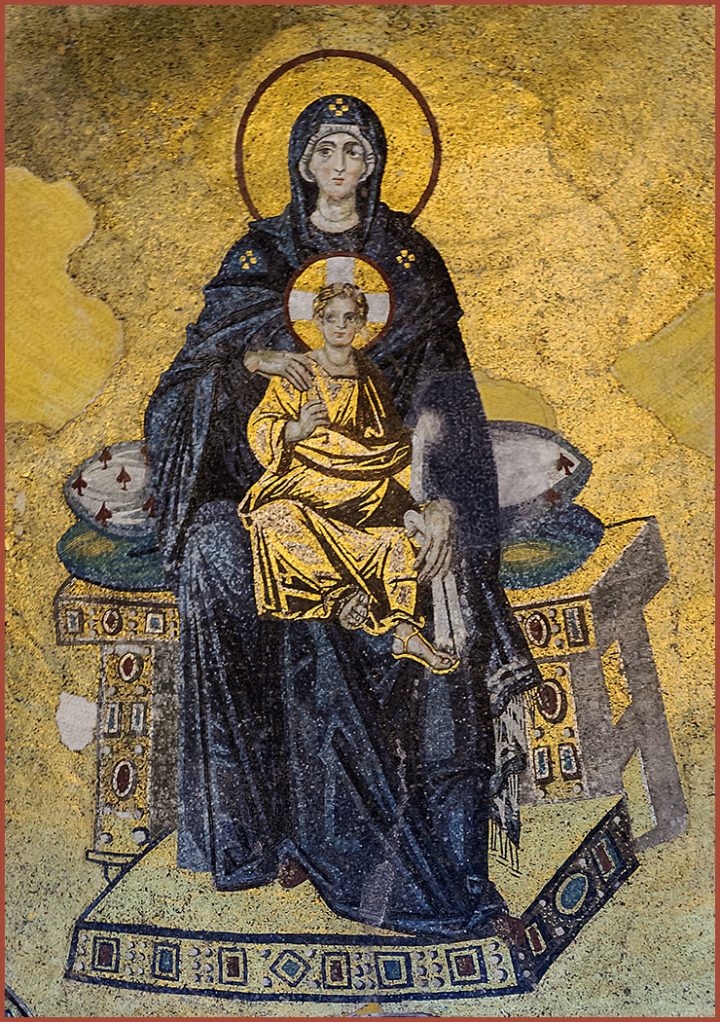
Virgin and Child mosaic, 9th century, Hagia Sophia
(About this Image)

Fr. Smith’s Commentary on the Second Reading
Feast of the Epiphany
Letter to the Ephesians 3:2–6
January 2, 2022

The second reading for the feast of the Epiphany is from the “Letter to the Ephesians.” (Ep 3:2-3a, 5-6). We examined this letter last summer in these commentaries. Those who read them will see that many passages from the letter would be very appropriate for the feast of the Epiphany but this one is particularly well suited.

We must remember a few things to start. Most scholars would agree that it was written by a disciple of St. Paul after his death. As we have many times noted, this would not be deceitful as his readers would have known that Paul was dead. As we saw last week with the reading of the letter to Titus, this allowed the author and indeed the leaders who followed Paul to show that they were in continuity with him. Who would follow the original apostles as leaders was a real problem and Ephesians is one of the clearest statements on how and why the Catholic Church developed. Continue reading “Epiphany – Joining Together To Be His Presence in the World”
Christmas and the Holy Family – Homily (Fr. Smith)

St. Luke was very much a Roman citizen and knew that the ultimate competition for Jesus was the emperor. He had lived through the reigns of several emperors and realized that the first – Augustus – was the most formidable, and so he begins the story of the birth of Jesus with him. We are meant to make comparisons.

The emperor was born Octavian in 63 BC. He came from a solid family but was not of the highest nobility. He was however the adopted son of Julius Caesar and demonstrated such military and political skill after his death that he became the most powerful man in Rome. He also understood how to use symbols and what we would now call public relations.

Continue reading “Christmas and the Holy Family – Homily (Fr. Smith)”

Community Mass – Holy Family

On Sunday, December 26, 2021, join us in person or online for the Feast of the Holy Family.

Our current Mass times are:

  • 9 AM EST – Morning Mass
  • 11:15 AM EST – Community Mass
  • 7 PM ESTEvening Mass

    Watch the video live or on replay via YouTube Live by clicking in the window above.
    Subscribe to our YouTube channel at youtube.com/stcharlesbklyn .

The readings will be from Cycle C.

Opening – O Little Town of Bethlehem – 446
Readings and Responsorial Psalm – 1007
Offertory – Away in a Manger – 448
Communion – Angels We Have Heard on High – 430
Recessional – Joy to the World – 437

The Gather 3rd Edition Hymnal/Missals are available for use in the church – pick one up as you enter and return it after Mass. Instructions on how to use the hymnal missal are available here: https://www.stcharlesbklyn.org/hymnal-missal/ .

Today’s readings are also available to read online at the USCCB website https://bible.usccb.org .

Christmas – Participating in Our Redeemer’s Birth

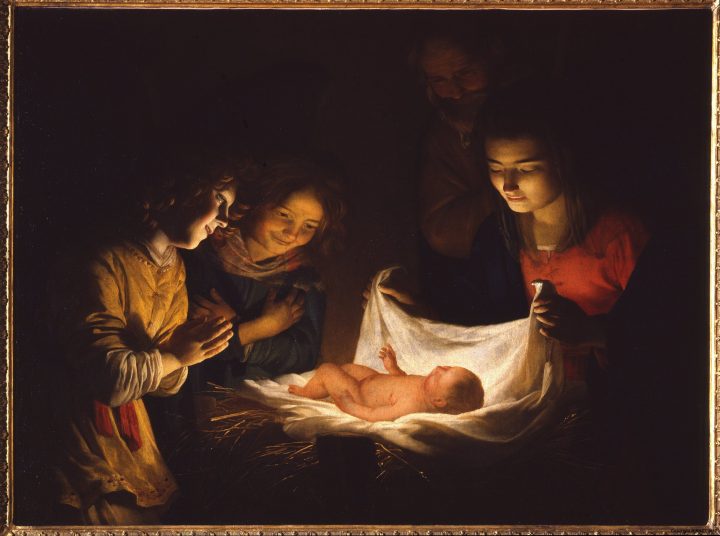
Adoration of the Child, Gerrit Van Honthorst,
c. 1619–1620, Uffizi Gallery (Florence)
(About this Image)

Now there were shepherds in that region living in the fields
and keeping the night watch over their flock.
The angel of the Lord appeared to them
and the glory of the Lord shone around them,
and they were struck with great fear.
The angel said to them,
“Do not be afraid;
for behold, I proclaim to you good news of great joy
that will be for all the people.
For today in the city of David
a savior has been born for you who is Christ and Lord.
And this will be a sign for you:
you will find an infant wrapped in swaddling clothes
and lying in a manger.”
(Luke 2:8–12 )

Fr. Smith’s Commentary on the Second Reading
Christmas
Titus 2:11–14
December 25, 2021

The second reading for Christmas midnight Mass, which we will celebrate here at 5 PM on Christmas Eve, is from the letter to Titus (2:11–14). This is one of the pastoral letters written in the name of St. Paul but most likely composed years after his death by a disciple. They reflect the situation of the church which the apostles left behind. The first generation of witnesses had died and the leaders who were left needed to establish not only how they would govern, but why they could govern. This did not arise abstractly but in concrete situations. These letters addressed them and are thus “pastoral” in that the new leaders prove their worth by the wisdom of their responses. Their use of Paul’s name would not have been seen as dishonest: everyone knew he was dead. They allowed the readers to look at what Paul had said and done in other situations and see if what his successors wrote “fits.” Titus’ letter fits very well not in the original situation but also for our Christmas.

Continue reading “Christmas – Participating in Our Redeemer’s Birth”