Upcoming Celebration of Candlemas (Feb. 2)

THE FEAST OF THE PRESENTATION OF THE LORD

Next Sunday, February 2, is 40 days after Christmas and we commemorate the presentation of Jesus and his ransoming as the firstborn son. We will read the beautiful passage from Luke’s Gospel and special prayers of the day. It is also called Candlemas day because the candles for the year are blessed and there is a procession with lit candles from the narthex to the sanctuary. This will be enacted at our 9 AM Mass with the children in our Religious Education program. If you have candles at home which you wished blessed, you are invited to bring them to that Mass. Instructions will be given beforehand.

3rd Sunday of Ordinary Time – Accept No Substitute

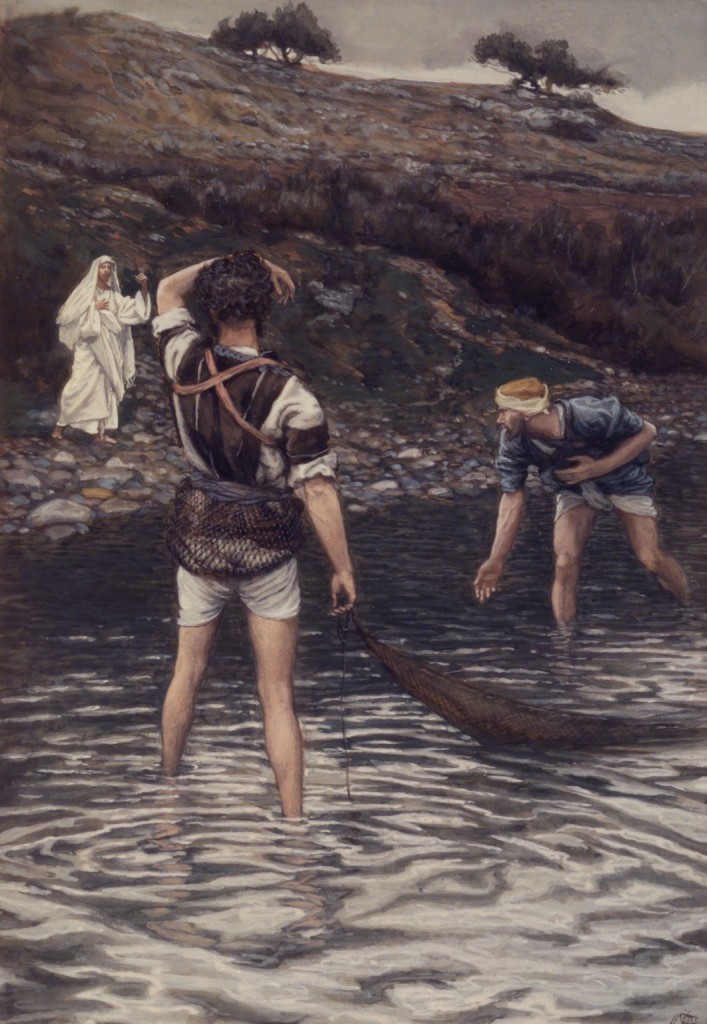
The Calling of Saint Peter and Saint Andrew, James Tissot, 1886-1894, Brooklyn Museum

FIRST READING
Isaiah 8:23-9:3
January 26, 2020

Today’s passage from Isaiah responds to a dangerous time in Jewish history and Isaiah will give us considerable information about it. Yet because of this very identification with a very specific time and place, it reveals the universal and timeless nature of the LORD’S power in history and provides a few very practical observations for us today.

First, Where Are the People?

The distress referred to at the beginning of the passage (Is. 8:23) is the enslavement of part of the Northern Kingdom “Zebulun and Naphtali” by the Assyrians around 731 BC. This process will be completed with the total destruction of Israel in 721 BC. Isaiah is writing from the Southern Kingdom (Judah) and is concerned not only about the Assyrian aggression but the effects of “cultural imperialism.” As we saw several weeks ago, King Ahaz, the reigning monarch, made a treaty with the Assyrians. Its high cost and openness to pagan worship caused serious disruption to the Jewish people. Only a change in leadership could avert disaster. Continue reading “3rd Sunday of Ordinary Time – Accept No Substitute”

2nd Sunday Ordinary Time – Fr. Smith Homily

Transcript:

The format for the readings for Sunday Mass in Ordinary Time – that is when the priest is in green vestments – is arranged very carefully. The Gospel for the year is either Matthew, Mark, or Luke, and is read straight through week by week. The first reading is from the Old Testament and is chosen to highlight something about the Gospel. The second reading, usually from St Paul, is not connected to the other readings and is also read consecutively over a three-year cycle. It is often neglected, but as we will be reading the 1st letter of Paul to the Corinthians, a true Christian masterpiece, from now until Lent I thought it a good idea to say a few things about it.

Now although it is not chosen to reflect any particular passage of St. Matthew’s gospel which we will be reading these weeks as well, they do share some interesting similarities not only in theology but in the social makeup of their communities.

Both were written to congregations which were composed of born Jews and born Gentiles, but who all considered themselves Christians. Antioch, where Matthew was very likely written, was a very large and cosmopolitan city; Corinth was the wild west. It is situated in the narrowest part of Greece, its waist and a natural transport spot. Travelling by sea was very dangerous and it made financial sense to pull into Corinth, unload the cargo, bring it across the isthmus to another port, put it on anther ship and sail away. This attracted a very rugged group of people, both Jew and Greek and provided a laboratory on how the Christian message can be misheard. Continue reading “2nd Sunday Ordinary Time – Fr. Smith Homily”

2nd Sunday of Ordinary Time – The Greatest of All Virtues is Love

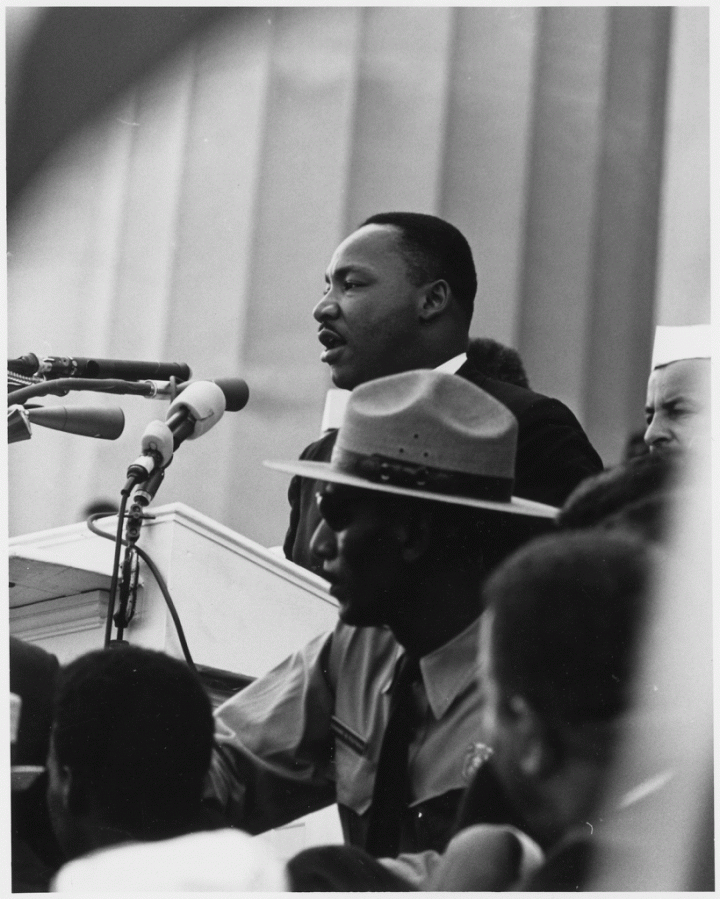
Dr. Martin Luther King, Jr. delivering his “I Have a Dream Speech” at the Civil Rights March on Washington, D.C., August 28, 1963. (National Archives ARC Identifier 542069)

FIRST READING
Second Sunday in Ordinary Time
Isaiah 49:3, 5–6
January 19, 2020

Today’s reading from Isaiah is undoubtedly beautiful but is often considered confusing. Who is the servant? Is it Israel, Isaiah himself, or someone or something else? All these positions have their defenders. Yet I think we will see that the editors of the final version which we read have produced is something theologically profound and psychologically accurate.

This passage was composed by someone we have named Second Isaiah. He lived in Babylon at the end of the exile of the Jewish people around 540 BC. To be more precise the exile only ended for those who wished to end it. Babylon was conquered by Assyria and the new king, Cyrus, invited the Jews to return to Jerusalem and rebuild their country and temple. His reasoning was colonial. He wanted people indebted to him to be in charge of the locals, and be subservient to him. Enough Jews thought there was a higher force involved, accepted the invitation and returned.

We see the consequences with the beginning of this chapter:

Continue reading “2nd Sunday of Ordinary Time – The Greatest of All Virtues is Love”