Second Sunday of Ordinary Time – Using Our Spirit-Given Gifts

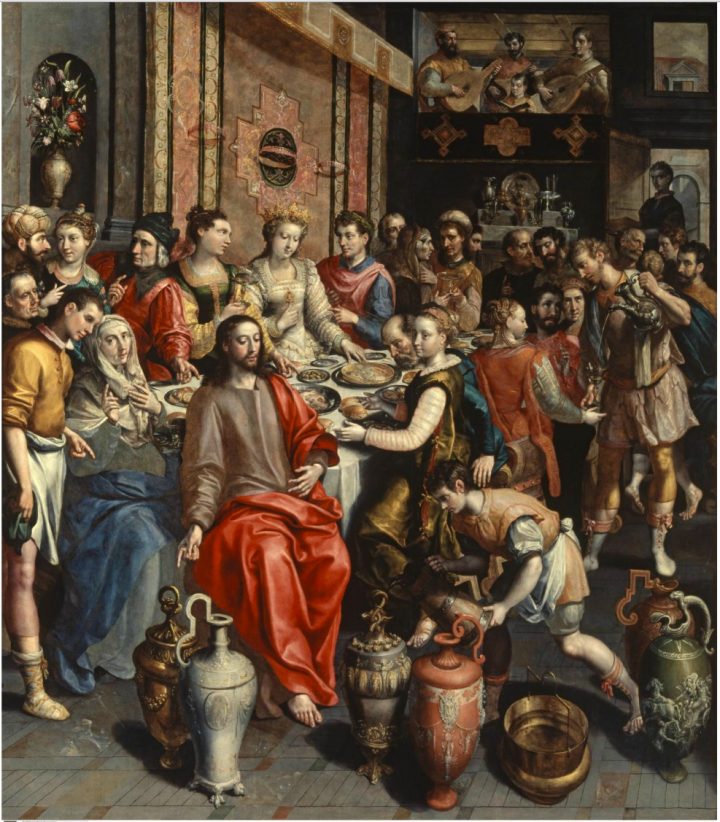
The Marriage at Cana, Maerten de Vos,
c. 1596, O.-L. Vrouwekathedraal
(About this Image)

Fr. Smith’s Commentary on the Second Reading
Second Sunday in Ordinary Time
1 Corinthians 12:4–11
January 16, 2022

TV Westerns of the 50s and 60s were a wonderful introduction to sociology. Wagon Train, Have Gun Will Travel, and countless others showed how towns and the social structures that maintained them developed. They mostly unconsciously revealed the importance of class and caste. Despite the almost official American ideology of rugged individualism, we saw how people worked together to build towns along rivers, between mountains, and eventually along train routes. Although most people farmed crops or herded animals, others were drawn to support roles of merchandising and transportation. There was almost always at least one church, school, and saloon in any town and perhaps to appeal to a wider audience, the contributions of white ethics were shown from the beginning. Black, Brown, and Asian people were added in the later sixties. Some programs were very honest about racial tensions but almost all about the conflicts between the very small elite and the workers and farmers. The realities both positive and negative of the power structures were clearly seen.

Continue reading “Second Sunday of Ordinary Time – Using Our Spirit-Given Gifts”
Baptism of the Lord – Homily (Fr. Smith)

As a celibate only child I have little practical advice to offer couples who are getting married. My only suggestion has been that they have a pre-natal bucket list. List the things they will not be able to do when the child or children arrive and do the most important ones. I have heard of some interesting selections: a picture safari to east Africa, explorations of Tuscan Hill towns and, early in my ministry, following the Grateful dead for a few months. Yet a wise woman has suggested that I add a specific one; get lots of sleep now. This is not only or even mostly because of sleep deprivation with a newborn but that once a child arrives parents will never quite have an anxiety-free moment. He, she, or they will always be on the parental mind one way or another. This is not a sign of neurosis or something unique to a particular marriage: this is love and it is also the best way to understand Baptism and indeed the Synod. 

First some history and theology. 

The good news of Jesus is that because we are sinners he died for us, came back to life, and offers us new life indeed a new way of being human through membership in his family, the Church. 

Continue reading “Baptism of the Lord – Homily (Fr. Smith)”

Community Mass – Baptism of the Lord

On Sunday, January 9, 2022, join us in person or online for the Feast of the Baptism of the Lord.

Our current Mass times are:

  • 9 AM EST – Morning Mass
  • 11:15 AM EST – Community Mass
  • 7 PM ESTEvening Mass

    Watch the video live or replay on demand via YouTube Live by clicking in the window above.
    Subscribe to our YouTube channel at youtube.com/stcharlesbklyn .

The readings will be from Cycle C.

Entrance: There’s a Wideness in God’s Mercy – 644
Readings and Responsorial Psalm – 1012
Offertory: Baptized in Water – 903
Communion: Behold the Lamb – 939
Closing: Shall We Gather at the River – 873

The Gather 3rd Edition Hymnal/Missals are available for use in the church – pick one up as you enter and return it after Mass. Instructions on how to use the hymnal missal are available here: https://www.stcharlesbklyn.org/hymnal-missal/ .

Today’s readings are also available to read online at the USCCB website https://bible.usccb.org .

Hearing the Spirit’s Renewal Today

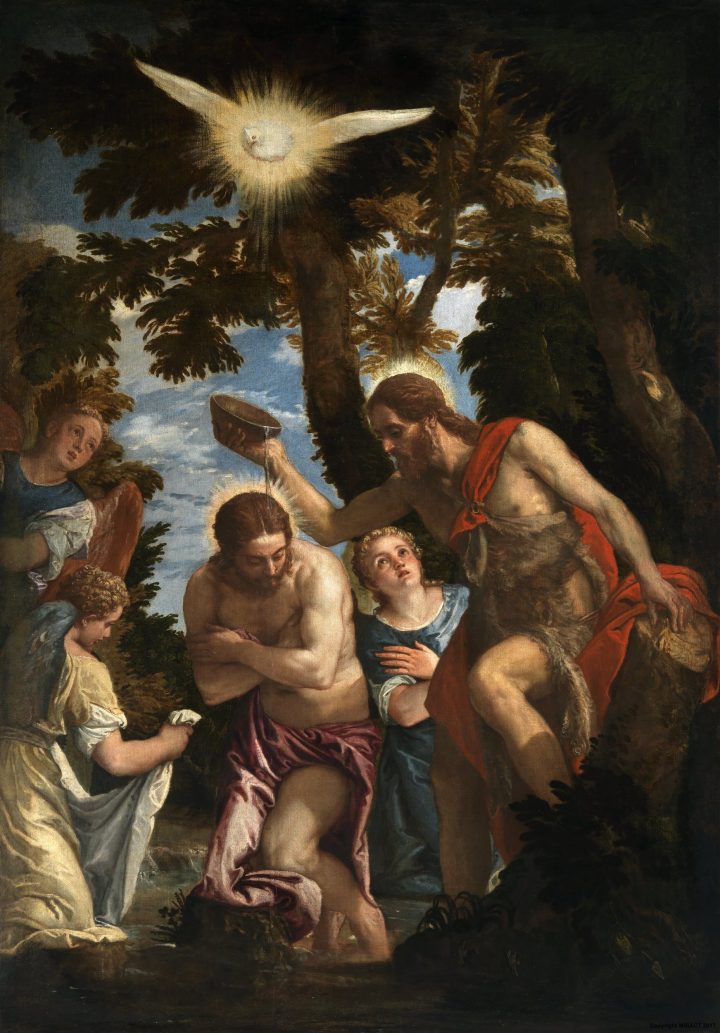
Baptism of Christ, Paolo Caliari (Veronese),
c. 1580, Palazzo Pitti (Florence)
(About this Image)


Fr. Smith’s Commentary on the Second Reading
Baptism of the Lord
Titus 2:11–14, 3:4–7
January 9, 2022

The first section of today’s second reading from the Letter of Paul to Titus was read two weeks ago at the Christmas masses. (Titus 2:11–14) As we noted then, the Letter to Titus was most likely written for a disciple of St. Paul, Titus the leader of the Church in Crete, by a successor of St. Paul. It was a pastoral letter which meant that it addressed practical issues in the church at the time. It was written in Paul’s name, although everyone knew he was dead, to show that his successors understood that they were applying Paul’s teachings in an authentic manner and should be obeyed. This reflects our situation today in an uncanny manner.

Continue reading “Hearing the Spirit’s Renewal Today”

Epiphany- Homily (Fr. Smith)

The book of Numbers is part of the Pentateuch, the first five books of the Bible. All literate Jews would have known this passage, and the others would have known of it. Because of it Messianic expectations included that a star would be a sign of his arrival. 

This is the primary background for today’s gospel but there is one other dimension. Matthew calls the visitors from the east magi. For many of his readers these would have been the court advisors and magicians who confronted Daniel in the court of Babylon. They had an extremely negative connotation. Using Magi is not neutral like simply saying king or wise man. We should see them like the Samaritan in Luke’s gospel. It was shocking that people who were not only not Jews but hostile to them would have an insight into the nature and actions of the Messiah. 

For centuries people have tried to discover what the Star was and from where did the Magi come. Some of the answers were ingenious but most rather silly and all distracting. A great principle for bible reading is the best interpreter of scripture is scripture.  We should always first look at the scriptures for the meaning of a bible passage. In this case we would very definitely be rewarded with the story of Balaam.

It is found in the book of Numbers and is set during the invasion of Canann by the Israelites. Under Moses they had been wandering and fighting for 40 years and had become a fierce and disciplined fighting force. The king of Moab, Balak, realized that he was about to be attacked by Moses and that he could not win by force of arms. He decided however to use different means and sought out Balaam a “seer” from the east to curse the Israelites. This was about 1400 BC and seer, or prophet, meant not someone who could predict or envision the future but someone who could change it. Balak wanted to hire Balaam as a supernatural hit man. Balaam is contacted by the emissaries of Balek and somewhat reluctantly he follows them to Canann. Though he tried to curse the Israelites, the LORD puts words of blessing in his mouth and the Israelites steadily improve their position. His final utterance however goes far beyond just this one battle”  
I see him, but not now; 
   I behold him, but not near— 
   a star shall come out of Jacob, 
   and a scepter shall rise out of Israel; (Nu 24:17). 

Continue reading “Epiphany- Homily (Fr. Smith)”