2nd Sunday of Advent – Awaiting Re-Creation and God’s Harmony

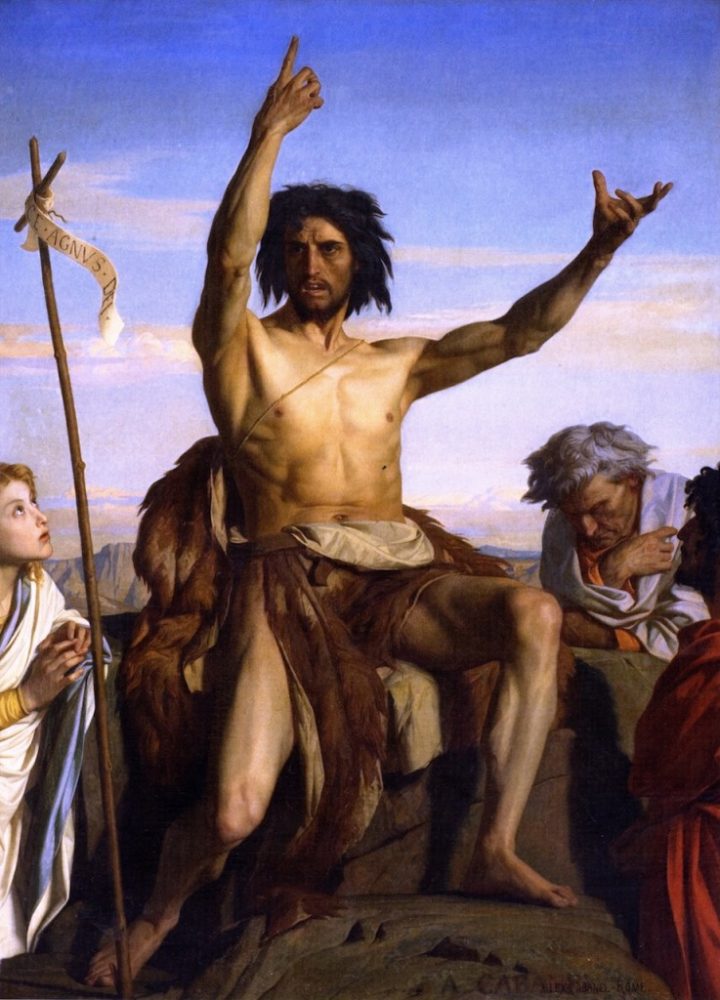
John the Baptist, Alexandre Cabanel, 1849, Musée Fabre (France – Montpellier)
(click for more information about this painting)

FIRST READING
Isaiah 11:1–10
December 8, 2019

Last week, we examined how (First) Isaiah understood the call of the Jews. He prophesied that they would be the means by which all nations were to know and worship the LORD. Speaking of the Temple on Mt. Zion, he wrote:

All nations shall stream toward it;
many peoples shall come and say:
“Come, let us climb the LORD’S mountain,
to the house of the God of Jacob,
That he may instruct us in his ways.”

(Is. 2:23)

He also had a glimpse of what the effect of the universal worship of the LORD would mean:

They shall beat their swords into plowshares
and their spears into pruning hooks;
One nation shall not raise the sword against another,
nor shall they train for war again.

(Is. 2:4)

This is the text of the Isaiah Wall in front of the United Nations. It is a beautiful statement of a desire for peace and harmony, but forgets that it comes from a specific time and place and must be read accordingly. Today then, we will look at what Isaiah meant by peace and how we can expect it to arrive.

Isaiah reflects the political and social reality of his time: from to c. 740 BC to 700 BC in Jerusalem. The rise of the Assyrian empire was the major political reality of his day and is the key to understanding both the national and international situation. Judah and Israel were in the middle between Assyria to the north and Egypt to the south. The leaders of both sought to play one empire against the other. Eventually though Judah (Jerusalem) became a vassal, client state, of Assyria. This means that a tremendous tribute was levied on the people. As is so often the case, the rich were able to pass these taxes on to the poor. When reading last week’s and this week’s passages, both the international and national causes and effects of injustice need to be remembered.

This is one of those cases when some of the most magnificent poetry and profound theology in the Bible arises from sorted and difficult circumstances. Here, we are basically given a meditation on the meaning of creation and re-creation.

Continue reading “2nd Sunday of Advent – Awaiting Re-Creation and God’s Harmony”
1st Sunday of Advent – Fr. Gribowich homily

Transcript:
Good morning everyone, and happy New Year!

Today’s the first Sunday of Advent and we begin a new Liturgical cycle, and the course of the liturgical cycle is also very much connected to the natural cycle of what we experienced in the seasons. As we all know, our days are much shorter now, right? At times, it can be kind of depressing – it’s like 4 o’clock and it looks like 10, right? But we know that the liturgical season kind of reflects our awakening to the light of the world – coming into Christmas, our days are the shortest and our days are the longest as we continue through this liturgical season, right through Pentecost, where the fullness of who God is is revealed to us.

So today at this first Sunday of Advent, we sit in darkness, if you will, but with this great sense of anticipation knowing that as we look upon around us in our world, and how the light will continually get stronger and brighter and longer, so too our journey with the Lord becomes stronger and brighter and more enlightening.
Continue reading “1st Sunday of Advent – Fr. Gribowich homily”

1st Sunday Advent (Fr. Smith homily)

It is commonplace to say that we judge the quality of our Sunday Worship by how we behave during the rest of the week. One of our parishioners summed this up with, “Don’t let Monday ruin your Sunday”. Today’s Gospel reading challenges us to take this seriously – indeed literally. 

First, let us look at why this is true, and then perform a little exercise. 

This is the first day of Advent, the beginning of the Church year. We will be reading from St. Matthew’s Gospel. We read St. Luke last year and he tutored us in history: how did the events of Jesus’ life fit together. I hope we all learned from him.  

St. Matthew is more practical. He will ask how do we build a Church. What is needed to allow a group of people to form a community?  Continue reading “1st Sunday Advent (Fr. Smith homily)”

1st Sunday of Advent – Living in the Light of the Lord Together

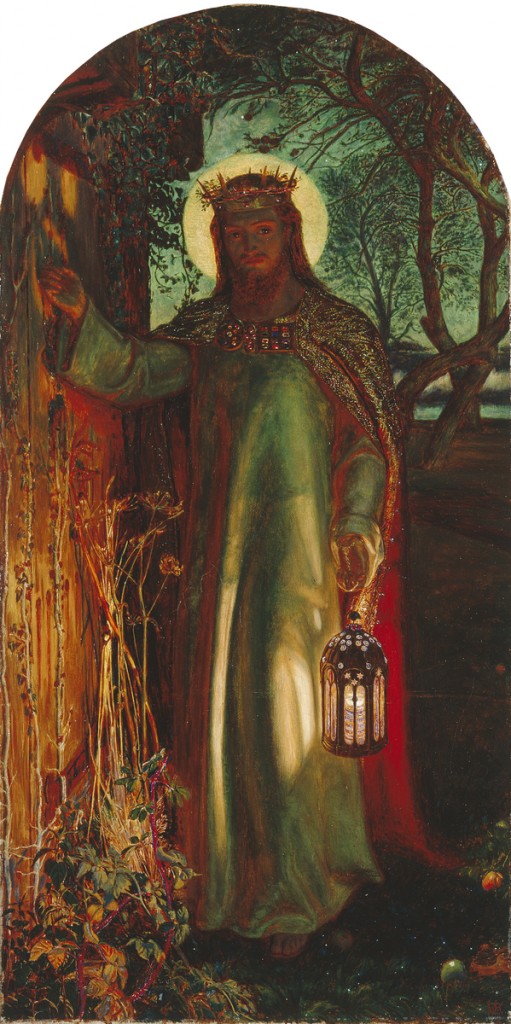
Light of the World, William Holman Hunt, 1851–1853, Manchester Art Gallery.

FIRST READING
Isaiah 2:1–5
December 1, 2019

Each Sunday this Advent, we will be reading from the Book of Isaiah. As we have seen previously, the Book of Isaiah was composed by three major authors over several centuries. “First Isaiah” is responsible for most of chapters 1–39 and lived in Judah during the eighth century BC. “Second Isaiah” wrote about the return of the Jews to Jerusalem after 540 BC and is credited with chapters 40–55. “Third Isaiah” wrote around 515 BC in Jerusalem and completed the book writing chapters 56-66. This book was not complied haphazardly: the three authors shared enough ideas and beliefs that it was reasonable that they shared a name. The readings that are chosen for Advent are profound and beautiful but in no way present a systematic review of Isaiah’s theology. The comparisons and connections however will be interesting. This week’s selection (Isaiah 2:1–5) has many parallels with next week’s (Is. 11:1–10). For ease and convenience, we will look at “why the Jews were chosen for the kingdom?” this week and examine “what will that kingdom look like?” next week.

The book of Isaiah opens with: Continue reading “1st Sunday of Advent – Living in the Light of the Lord Together”

December 8 Collection for Religious Retirement Fund

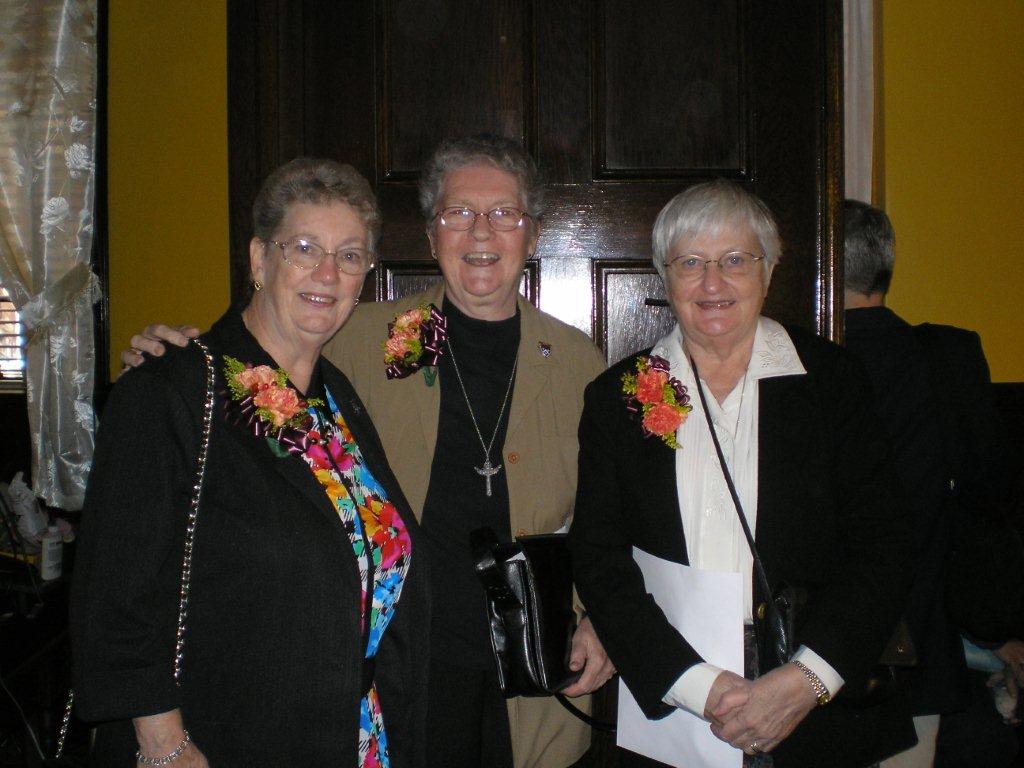
Thank You Gathering for Sisters of St. Joseph, Oct. 2010

The priests who have served St. Charles in its almost 150 year history have been “diocesan” priests. That means that they were ordained to serve the people of the Diocese of Brooklyn. The bishop and people of the diocese have the responsibility of caring for us when we are sick or infirm. Your generosity in the “Generations of Faith Campaign,” 40% of which went to build up the trust funds for priests, was deeply moving to us all.

The sisters and brothers as well as priests from religious orders who were not ordained for the diocese were not covered in this campaign. As members of religious communities, they can come from anywhere and serve anywhere. A national solution was needed to help them. This is the origin and meaning of the collection for retired religious which will be taken up next week in every parish in the country. It is, to me, the most important collection of the year and will be taken up next week, Dec 8th.

The religious women, who did so much to form me and my sense of vocation, and the religious men, who I met later in life worked incredibly long hours for little payment. If there were any plans for retirement at all, it would have been based on new members filling the ranks. As we know the numbers have declined and they now need our help.

Although this collection is national and it may seem to bring in considerable money, it really does not even touch the surface of the problem. Orders have had to sell off property and join together to save money. This collection is helpful financially but, as my “religious” friends tell me, it is usually the largest special collection and they take that as a sign of support and love.

Let be so generous that they will all know our love for them and gratitude to them. You can give online at https://stcharlesbklyn.weshareonline.org/ws/opportunities/ReligiousRetirementFund or at the collection taken up at Mass next Sunday, December 8.

In Christ,
Fr. Bill

PS – A letter – hand written the way they taught so many of us – means more than anything else. If you know the address of a religious who taught or inspired you: WRITE HIM OR HER NOW!